From SmPC to ePI in One Prompt
We converted the approved SmPC for Zoledronic acid medac into a complete EMA FHIR ePI XML Bundle in a single Regulaido run. Two regulatory affairs specialists reviewed the output (one in a blinded review) and confirmed it matches the EU ePI Common Standard and template structure.
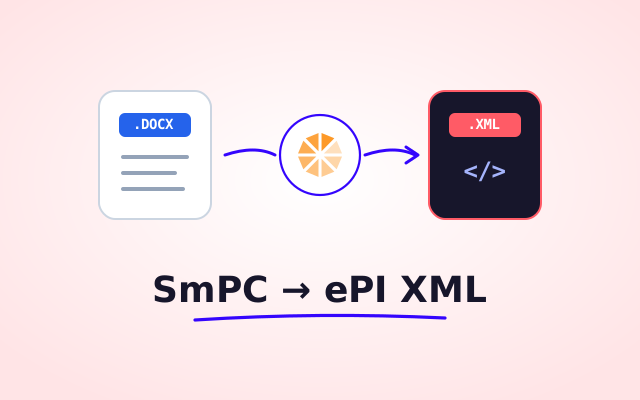
The EMA transition to structured ePI
The European Medicines Agency is transitioning product information from Word and PDF files to electronic Product Information (ePI), encoded as FHIR XML under the EU ePI Common Standard.
Preparing an ePI submission requires more than exporting text. Each XML bundle must use the mandatory EMA SPOR section codes, follow the HL7 FHIR Composition hierarchy, wrap clinical text and tables in clean XHTML, and maintain valid resource identifiers. For Marketing Authorisation Holders managing dozens or hundreds of products, manual conversion is time-consuming and error-prone.
In March 2026, the EMA published its phased implementation timeline:
EMA ePI Rollout Timeline
ATC code J07. First therapeutic area to adopt ePI format.
ATC codes L01, L04. High-volume, high-complexity product area.
Full multilingual capabilities, NCA pre-implementation, IRIS-eSubmission integration.
Once the new EU pharmaceutical legislation takes effect, ePI becomes mandatory for all newly authorised medicines. Once electronic, it stays electronic for all subsequent variations.
Internal labeling and packaging validation cycles typically take 6 to 12 months before submission.
Test setup
To test how well Regulaido handles full ePI conversion on an authorised medicine, we used the public EPAR product information for Zoledronic acid medac 4 mg/100 ml solution for infusion (EU/1/12/779) from the EMA website alongside the official EMA ePI reference template (a sample FHIR XML Bundle containing placeholder fields).
We uploaded both files to Regulaido and instructed the agent to populate the FHIR XML template with the Zoledronic acid medac product information, preserve the exact XML hierarchy and EMA section codes, convert tables and lists to valid XHTML, and populate the medicinal product metadata.
The run produced a 1,600-line FHIR XML Bundle containing all four required ePI compositions: the Summary of Product Characteristics (SmPC), Annex II, Labelling, and Package Leaflet (PIL), with every section mapped to its EMA code and clinical tables formatted as XHTML.
Side-by-side XML comparison
Below are five sections comparing the official EMA ePI reference example from the EMA FHIR Implementation Guide against the XML generated by Regulaido from the Zoledronic acid medac SmPC. See if you can tell which snippet came from Regulaido.
Both XML files use the same EMA code systems, FHIR section nesting, and XHTML markup. The main difference in the
snippets above is that the EMA sample uses placeholder strings (ProductX CompanyY), whereas the
Regulaido output contains the actual Zoledronic acid medac text and tables from the EPAR PDF.
Review by regulatory affairs specialists
We sent the generated XML bundle to an external regulatory affairs specialist to check it against the EMA ePI guidance and QRD template requirements.
Her review confirmed three points:
- The bundle conforms to the EU ePI Common Standard
- The text and headings match the English QRD template
- All four compositions (SmPC, Annex II, Labelling, PIL) are present and properly nested
She also passed the file to a colleague for a second review without mentioning how it had been created. Her colleague reached the same conclusion and noted:
"Generation by this method I believe would significantly reduce administrative burden."
Following the review, she asked to test the workflow on a product SmPC she had authored herself. As with any regulatory submission, final quality control remains with the regulatory affairs team: Regulaido handles the XML conversion and section mapping so the specialist can focus on verifying clinical accuracy against the approved label.
Applying this across a product portfolio
The same document-to-FHIR pipeline applies across the full lifecycle of product information:
- Initial ePI conversion for existing SmPC, Annex II, Labelling, and Package Leaflet PDFs or Word files
- Type IA/IB and Type II variations, keeping the FHIR XML bundle synchronized when clinical sections change
- Multilingual rollouts across EU member-state translations ahead of the 2027–2028 EMA milestones
If you are preparing for the EMA ePI rollout and want to test this on one of your own SmPCs, reach out at anton.wiehe@pharos-labs.com.